
Eyelash Extension Course for Beginners. What to Expect and Where to Start
Oct 19, 2026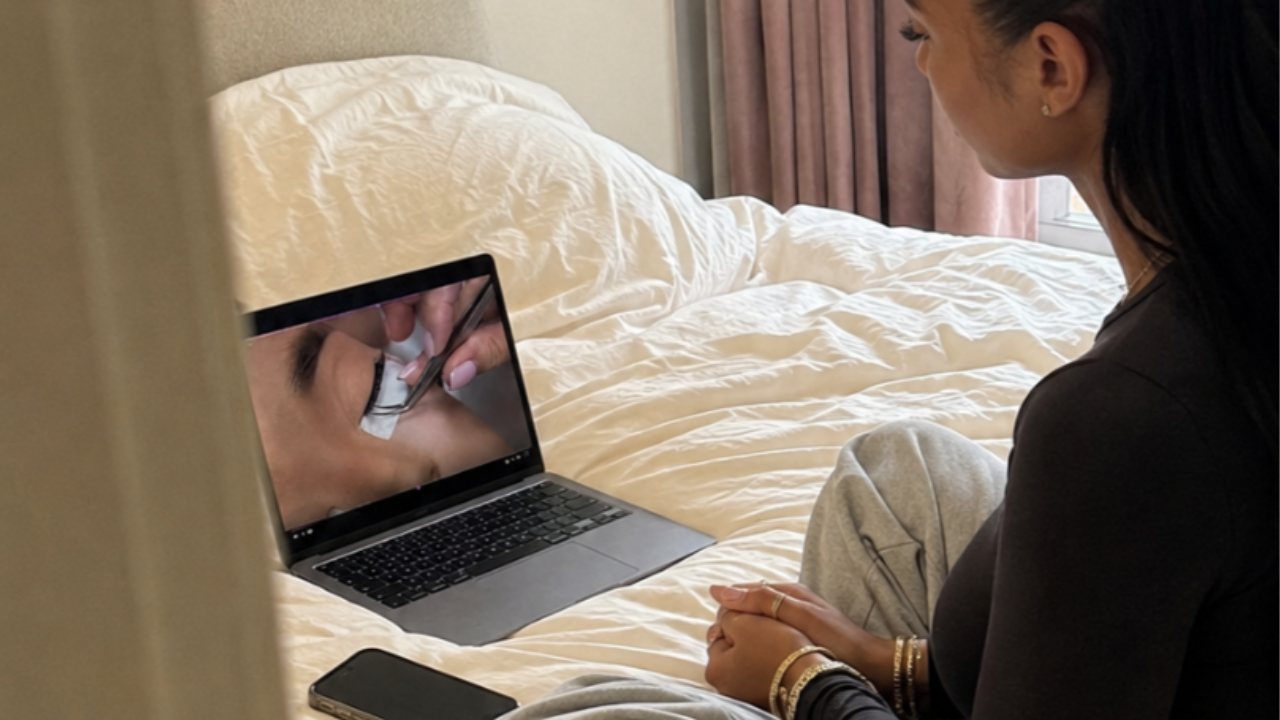
Starting from zero is normal. Every professional lash artist started with no idea what they were doing. The question isn't whether you're ready, it's whether you're finding training that will actually prepare you.
There's a lot of beginner lash training out there. Some of it is excellent. A fair amount of it will hand you a certificate, wish you luck, and leave you standing in front of your first real client with no idea how to handle a difficult lash line or an adhesive that's behaving differently because the room humidity changed.
This guide is for people who are serious about learning lash extensions properly, not just getting a piece of paper. Here's what a good beginner course should cover, how to evaluate the options, and what to look out for before you commit.
Do You Need Experience to Train in Lash Extensions?
No. Lash extension courses for beginners are designed for people with no prior beauty training.
That said, there are a few things that will make your training easier:
Good fine motor control. You'll be working with very small tools in a precise, repetitive way. If you already enjoy things that require patience and a steady hand, painting, needlework, calligraphy, dental nursing, you'll likely adapt quickly.
Patience. A full set of classic lashes can take 90–120 minutes when you're learning. Rushing is what causes mistakes. The artists who progress fastest are usually the ones who slow down and focus on getting it right before trying to get it fast.
Attention to detail. Lash extensions require consistency. Every extension should be placed at the same height above the lid, at the same angle, without touching the skin. Developing an eye for this takes practice, but it starts with caring about the detail.
No prior beauty training is required. Some of our most technically capable graduates came from completely unrelated backgrounds. What matters more than where you've been is how you approach the learning.
What Does a Beginner Lash Extension Course Cover?
A properly structured beginner course covers two distinct things: theory and practical technique. Both matter, and neither replaces the other.
Theory: The Foundation
The theory side of beginner lash training should cover:
Lash anatomy and growth cycles Understanding how natural lashes grow and shed is fundamental. It affects which extension weight is appropriate, how long a set will last, and why clients sometimes notice more shedding than usual.
Adhesive science How lash adhesive works, what affects curing time (humidity, temperature, application technique), how to avoid fumes, and how to handle adhesive safely.
Health, safety, and hygiene Contra-indications, conditions that mean extensions aren't suitable for a client. Allergy protocols. How to clean and maintain your tools. What to do if something goes wrong.
Client consultation How to assess a client's natural lash health, understand what they want, and set realistic expectations. This is a skill, not just a checklist.
Aftercare What to tell clients about maintaining their lashes. What to avoid. How to handle a client who isn't following aftercare advice.
Business basics How to price your work, manage bookings, and protect yourself legally as a professional.
All of this is covered in our Beginner Lash Training online course, available for £79. It's self-paced, accessible from anywhere, and gives you a complete theoretical foundation before you touch a real client.
Practical: Where the Skill Comes From
The honest truth about lash extension training is that you cannot learn technique from a video. Theory tells you what to do and why. Practice is where you develop the ability to actually do it.
A good beginner practical session should include:
- Application on mannequin heads to develop your isolation and placement technique
- Application on real models with direct supervision
- Feedback on your grip, your angle, and your adhesive application
- Guidance on lash mapping, designing a set to suit the client's eye shape and lash length
- Speed and consistency building, getting your sets to a professional standard, not just technically correct but commercially viable
At House of Lashè, our Studio Practice sessions bring beginner students into the working salon. You're not in a training room that gets packed away after the weekend. You're in the same studio where our clients are booked and served every day, with the same equipment, the same lighting, and the same standards.
Classic vs Volume: Which Should Beginners Learn First?
This is the most common question beginners ask. The answer is consistent across the industry: start with classics.
Classic Lashes
One extension applied to each natural lash. It's the most technically demanding in terms of isolation, you need to pick up a single natural lash from a full set, hold it, and apply a single extension. Getting clean isolation takes time to develop.
Classic sets are also the most natural-looking, which makes them forgiving to learn. A slightly imperfect classic set doesn't jump out the way a slightly imperfect volume fan does.
Volume Lashes
Multiple ultra-fine extensions fanned together and applied to a single natural lash. Volume technique, specifically making and placing consistent fans, is built on top of the isolation skill you develop with classics. Most providers won't teach volume until a student has demonstrated solid classic technique.
If you see a beginner course that promises to teach classic AND volume AND wispy AND fox eye in a weekend, treat that claim with scepticism. Breadth at the expense of depth is one of the most common failings in lash training.
For beginners: focus on classic first. When your isolation is consistent, your lash lines are clean, and you're completing sets in a commercially viable time, then explore volume.
How Long Does It Take to Learn Lash Extensions?
Longer than a weekend. Less than you might think.
Here's a realistic timeline:
Weeks 1–3: Complete the online theory course. Absorb the anatomy, the products, the safety protocols, the consultation process. Take the time to understand adhesive science, it's the thing most beginners skip and then struggle with later.
Week 3–5: Studio Practice. Supervised hands-on application, mannequin work, then real model practice with direct feedback. This is where the gap between "understanding the theory" and "being able to do it" gets closed.
Week 5–7: Assessment preparation and Professional Assessment. Demonstrate your competency on a real model in front of a qualified assessor. This isn't a pass/fail rubber stamp, it's a genuine test of whether you're ready to work commercially.
Week 6–8: House of Lashè Accreditation. Your formal qualification, recognised for insurance purposes.
Most students complete the full pathway in four to eight weeks, depending on how much time they're able to commit around existing work or family commitments. It's designed to be done alongside life, not instead of it.
What Happens After Your Beginner Course?
This is where a lot of training providers fall short. The certificate lands and the support stops.
Here's what should happen after you qualify:
You get insured. This is step one before taking any commercial clients. Professional insurance for lash artists requires an accredited qualification. House of Lashè Accreditation is recognised for this purpose.
You build a portfolio. Your first clients will likely be friends, family, and people willing to pay a reduced model rate while you develop speed and confidence. Document everything, before and after photos for every set. This is your marketing material and your proof of progress.
You build speed. A classic full set that takes you 2.5 hours when you qualify will get to 90 minutes within your first few months of regular client work. Speed and consistency come with volume of practice, not more coursework.
You keep learning. Volume lashes, wispy sets, brow services, each additional skill adds to your service menu and your earning potential. At House of Lashè, we offer ongoing mentorship and advanced training for graduates who want to keep developing.
Red Flags in Beginner Lash Courses
Before you book, watch for these:
No accreditation. If the qualification isn't recognised for insurance purposes, it's not worth the paper it's printed on for commercial work. Ask directly: "Which insurance providers accept this qualification?"
Online only, no practical component. Online theory is valuable. It's not sufficient on its own for a qualification that allows you to take paying clients.
Everything in one weekend. Classic, hybrid, volume, wispy, all crammed into two days with 10 other students. This is the breadth-over-depth problem. You won't develop actual technique; you'll just have watched technique being demonstrated.
No clear pathway after the course. What happens when you get home and your first client has a contra-indication you don't recognise? Is there someone you can call? An active community you can post in? If the answer is "check YouTube", that provider doesn't have your back.
Trainers who don't actively practise. The best lash trainers are working lash artists. If your trainer last did a client set several years ago and has been teaching full-time since, they'll teach you what worked then, not necessarily what works now.
Why House of Lashè for Beginners?
We didn't build an academy because training is a nice side income. We built it because we saw consistently what happened when lash artists came through poor training, and because we know what good preparation actually looks like.
You train in a real, working salon. Not a classroom. Not a converted living room. The same studio where our clients come every week. The environment you train in is the environment you'll be working in.
Your trainer has done this professionally for over a decade. Davina has 11 years of client-facing lash experience, 500+ Google reviews, and a 4.8★ rating. She still does hands-on work. That's not a small thing.
The online course is actually good. Our £79 beginner theory course is self-paced, thorough, and built around preparing you for real practice, not just covering the syllabus for a certificate.
You get accreditation that means something. House of Lashè Accreditation opens the door to professional insurance and commercial work. That's the only reason a qualification matters.
You become part of something after you qualify. Our graduates are part of the House of Lashè community. They have access to ongoing support, industry knowledge, and a peer network of working professionals at every stage of their careers.
Comparing Beginner Lash Courses: What to Look For
|
House of Lashè
|
Typical Online-Only Provider
|
Typical 2-Day Weekend Course
|
|
|
Theory foundation
|
✓ Structured, self-paced
|
✓
|
Sometimes
|
|
Hands-on practice
|
✓ In working salon
|
✗
|
Limited (high ratios)
|
|
Real model practice
|
✓ Supervised
|
✗
|
Depends on ratio
|
|
Accreditation for insurance
|
✓
|
Sometimes
|
Sometimes
|
|
Post-course support
|
✓ Ongoing community & mentorship
|
✗
|
Rarely
|
|
Training environment
|
Real working salon
|
N/A
|
Hired venue/classroom
|
|
Trainer's active practice
|
✓ 11 years, currently practising
|
Varies
|
Varies
|
Frequently Asked Questions
Can I learn lash extensions online? The theory foundation of lash training, anatomy, products, adhesive science, health and safety, consultation, can absolutely be taught online. Practical technique cannot. Any course that claims to fully qualify you without in-person practical work should be treated with scepticism.
How much does a beginner lash extension course cost? Costs vary widely. Online beginner theory courses typically range from £50 to £200. In-person training components add to this. At House of Lashè, the online Beginner Lash Training is £79. Studio Practice, Assessment, and Accreditation are priced separately. Full details here →
How long does it take to become a professional lash artist? Most students complete the full beginner pathway, online theory, studio practice, assessment, accreditation, within four to eight weeks. Building a commercial client base typically takes two to six months of regular practice after qualifying.
Do I need a beauty background to do a lash course? No. Lash extension training is open to beginners with no prior beauty qualifications. Fine motor control, patience, and attention to detail matter more than any previous qualification.
What kit do I need to start a lash extension course? Most training providers include starter kit guidance with their courses. At House of Lashè, the online course covers everything you need to start purchasing equipment. You don't need to source a full professional kit before you begin the theory.
Can I do lash extensions part-time? Yes, many lash artists run their practice alongside another job, particularly while building their client base. Lash extensions are one of the most flexible beauty services for scheduling. A full day of back-to-back appointments is typically four to six sets.
What's the difference between an accredited and non-accredited lash course? An accredited qualification is recognised by professional bodies and insurance providers, which means you can get commercial public liability insurance. A non-accredited course may teach you technique but cannot give you the legal basis to take paying clients professionally.
Start Your Lash Training Today
If you're ready to start, the online beginner course is the right first step. £79, self-paced, and you can begin today.
If you're not sure yet, have a look at the full course pathway before committing. There's no pressure, but the sooner you start the theory, the sooner you'll be ready for the hands-on work.
House of Lashè 16 High Street, Walthamstow, London, E17 7LD Tuesday: 9am – 5:30pm Wednesday: 9am – 9pm Thursday: 9am – 9pm Friday: 9am – 5:30pm Saturday: 9am – 5:30pm Sunday & Monday: Closed